Peptides are short chains of amino acids used as signalling molecules. A small number are FDA-approved drugs; many are prescribed off-label, and some are sold online with claims the evidence does not support. Our consultations separate those categories plainly, so you know which one your protocol falls into before you start.
GLP-1 and dual agonists such as semaglutide and tirzepatide. In their obesity-labeled versions these are FDA-approved for chronic weight management, and they carry the strongest evidence base in peptide medicine.
Sermorelin, ipamorelin and CJC-1295 are prescribed off-label. The evidence for body composition and sleep quality is modest and frequently overstated online. Sermorelin in particular is often described as FDA-approved; its original approval was withdrawn in 2009.
BPC-157 and similar repair peptides have promising animal data and essentially no human trial data. We will discuss them with you, and we will say so rather than presenting them as proven.
Bremelanotide (Vyleesi) is FDA-approved for hypoactive sexual desire disorder in premenopausal women. Candidacy is assessed in consultation like any other prescription.
Sourcing is the single largest safety variable in peptide therapy. Vials sold as “research use only” sit outside the pharmacy system entirely. Ask us — or any Miami clinic — which licensed pharmacy fills your prescription and what testing that pharmacy performs.
Baseline bloodwork comes before any peptide is prescribed. It establishes candidacy, rules out contraindications, and gives us a real measure to compare against when we review whether the protocol is working.
Want the long version first? Our physician team wrote a full guide: Peptide Therapy in Miami: What to Know Before Your Consultation.
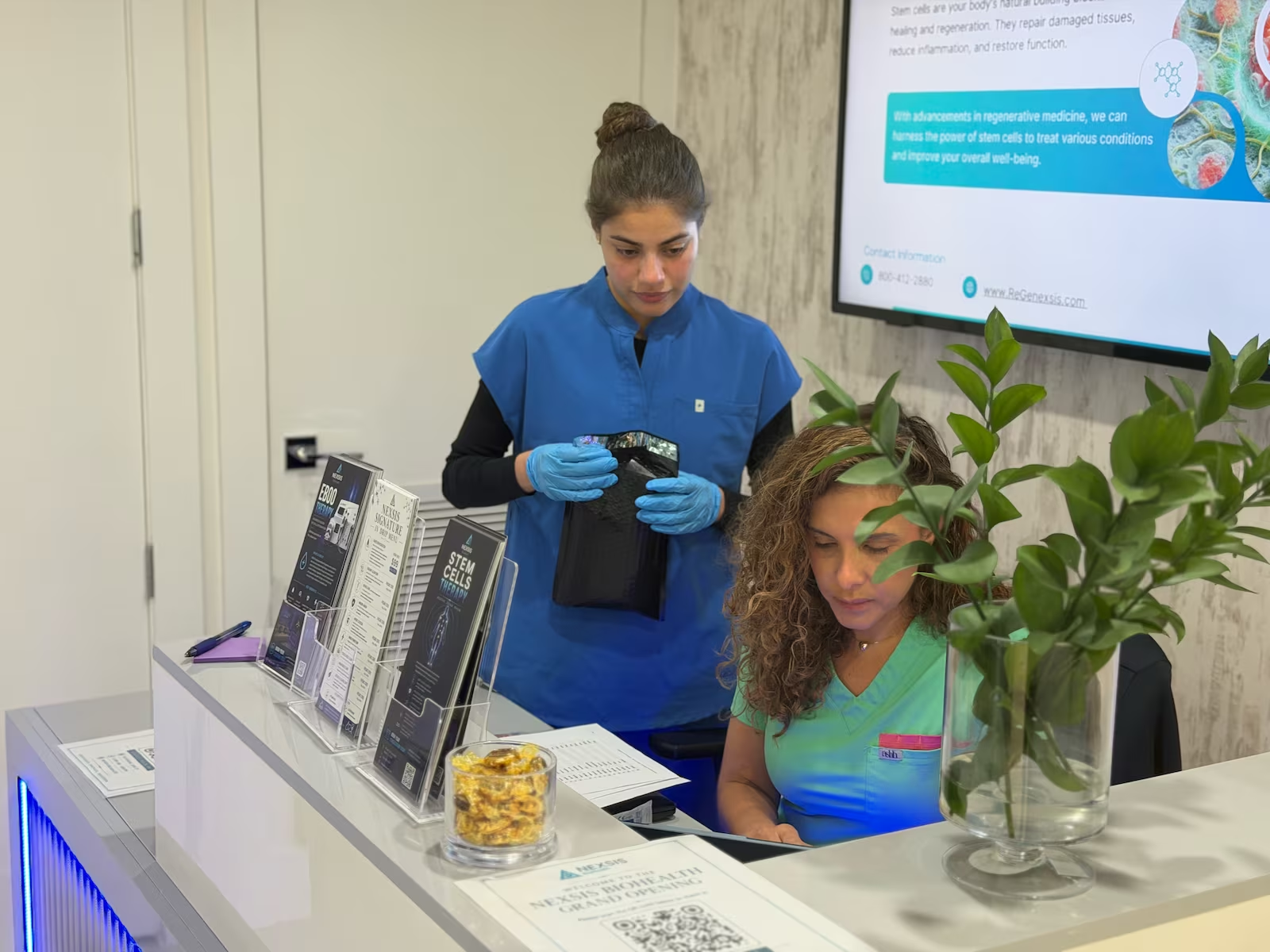
We start with what you are actually trying to change — weight, recovery, sleep, energy, libido — alongside your medical history, current medications and any prior peptide or hormone use. Goals decide which category of peptide is even worth discussing.
Bloodwork before prescribing, not after. Baseline labs establish whether you are a candidate, surface contraindications, and give us something concrete to measure against when we review the protocol later.
Not everyone is a candidate, and some peptides are not appropriate alongside certain conditions or medications. If the honest answer is that a peptide will not help you, we will tell you that instead of writing a prescription.
You leave with the protocol, the pharmacy it is filled through, the realistic timeline, and the specific markers we will re-check to decide whether it is working. Agreeing what success looks like in advance is what keeps a protocol honest.
Our clinic is in Brickell, Miami, and we see peptide patients from Coral Gables, Coconut Grove, Downtown Miami, Key Biscayne and across South Florida. Consultations are in person so that labs and candidacy can be reviewed properly.
Peptide protocols are prescribed and monitored by our physician team. Follow-up visits are scheduled around your lab re-checks rather than a fixed calendar.

Book a consultation with our physician team in Brickell. We will review your goals, order baseline labs, and tell you plainly whether a peptide protocol is the right route for you.