Hyperbaric oxygen therapy in Miami has moved from hospital wound-care units into wellness clinics, and the marketing has moved faster than the evidence. If you are considering HBOT for recovery — from training, surgery, illness or a lingering post-viral fog — the useful thing is not another list of benefits. It is a clear account of what happens inside the chamber, which claims are supported, which are not, who should not go in, and what your first session in Brickell will actually be like.
This guide is written to be read before you book. It cites the primary sources so you can check them, and it says plainly where the evidence is thin.
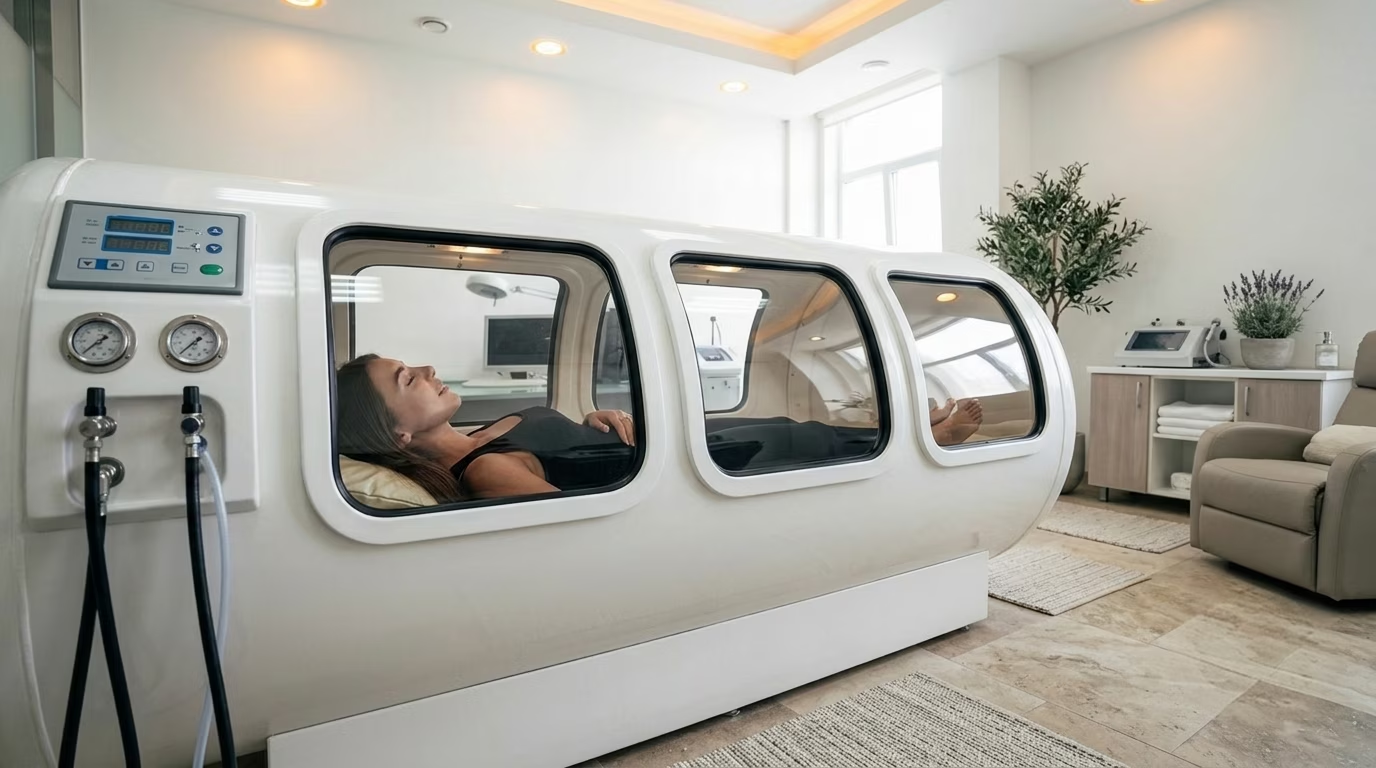
The mechanism is genuinely simple physics. Henry's law states that the amount of a gas dissolved in a liquid is proportional to the partial pressure of that gas at the surface. Breathe 100% oxygen at normal atmospheric pressure and roughly 1.5 mL of oxygen dissolves per decilitre of plasma. Breathe 100% oxygen at 3 atmospheres absolute and that rises to about 6 mL/dL — which exceeds the roughly 5–6 mL/dL that resting tissue extracts. At that point, dissolved plasma oxygen alone can meet resting metabolic demand, with no contribution from haemoglobin at all.
That is not a theoretical curiosity. Boerema's classic 1960s "life without blood" experiments kept exsanguinated pigs alive under hyperbaric conditions on plasma alone.
The more interesting mechanism is what happens after you leave the chamber. Hadanny and Efrati described this as the hyperoxic-hypoxic paradox: it is the fluctuation in free oxygen concentration, not the absolute level, that drives the regenerative response.
Under normal oxygen conditions, prolyl hydroxylase enzymes tag hypoxia-inducible factor 1-alpha (HIF-1α) for degradation. True hypoxia blocks this, HIF-1α accumulates, and a cascade of regenerative genes switches on — including vascular endothelial growth factor, which drives angiogenesis. Repeated hyperoxia produces a comparable cascade by a different route: antioxidant scavengers have a longer half-life than the reactive oxygen species they neutralize, so the return to normal air creates a relative, hypoxia-mimicking state. You get the regenerative signal while never actually depriving tissue of oxygen.
The most cited human data here come from Thom and colleagues (2006). Using a protocol of 2.0 ATA for two hours across 20 treatments, they found that a single exposure doubled circulating CD34+ stem cells, and that over the full 20-treatment course circulating CD34+ cells increased eightfold. The mechanism proved to be nitric oxide-dependent — mobilization failed in eNOS-knockout mice and was blocked by NOS inhibitors.
Note the protocol: 2.0 ATA, 20 sessions. The effect is dose-dependent. This is not what a single session in a low-pressure chamber does.
Raising tissue oxygen tension restores neutrophil oxidative killing (oxygen is the substrate for the reactive oxygen species neutrophils use), directly suppresses obligate anaerobes and inhibits clostridial toxin production, and synergizes with several antibiotic classes against biofilms. Collagen synthesis is also oxygen-dependent, since prolyl and lysyl hydroxylation require molecular oxygen. These mechanisms are why HBOT's strongest indications are infectious and wound-related.
If you take one thing from this article, take this. Miami has a growing number of "mild HBOT" providers using soft-sided fabric chambers, and they are not delivering the same treatment.
The Undersea and Hyperbaric Medical Society's position statement on low-pressure fabric chambers is explicit: UHMS does not recommend mild hyperbaric therapy for any medical purpose other than acute mountain sickness, because all approved indications require a minimum of 2.0 ATA with near-100% oxygen — a dose a fabric chamber cannot deliver.
This matters because every mechanism described above was demonstrated at 2.0 ATA or higher. Thom's stem cell mobilization, the HIF-1α response, the angiogenesis data — none of it was shown at 1.3 ATA on room air. Our Brickell chamber is a clinical-grade hard-shell unit operated by trained medical staff, and when you compare Miami providers this is the first specification to ask about.
The FDA regulates hyperbaric chambers as Class II medical devices, cleared for a defined list of conditions. The UHMS maintains a parallel list of approved indications, currently 14 numbered categories in the 15th edition of its indications manual, with avascular necrosis added as the newest indication in March 2024.
The recognized indications include:
Published counts of these indications vary between 13 and 17 depending on how sub-items are grouped, which is why you will see different numbers on different sites.
Everything outside that list — including most recovery, performance and longevity applications — is an off-label wellness use. That does not automatically make it unreasonable, but you deserve to know which side of the line you are on before you pay.
The FDA has issued consumer warnings specifically because hyperbaric chambers are marketed for conditions they are not cleared to treat. In July 2021 the agency stated chambers are not approved to treat COVID-19, cancer, Lyme disease, autism or Alzheimer's disease. Its earlier consumer update named a longer list of unproven marketed claims including AIDS/HIV, asthma, Bell's palsy, brain injury, cerebral palsy, depression, heart disease, hepatitis, migraine, multiple sclerosis, Parkinson's disease, spinal cord injury, sports injury, stroke and diabetes. The FDA's core concern was that unproven claims may cause patients to delay or forgo proven therapies.
In August 2025 the FDA issued a letter to healthcare providers after becoming aware of serious injuries and deaths from fires during HBOT, reinforcing requirements around cotton or hyperbaric-compatible clothing, prohibition of electrical devices in the chamber, proper grounding, and staff training. This is why the pre-session rules described below are not optional formalities.
This is the use most often marketed to Miami's fitness-oriented population, and the evidence is negative. A Cochrane systematic review covering nine trials and 219 participants found no significant difference versus sham for ankle and knee sprains in recovery time, pain or swelling — and for delayed-onset muscle soreness, found that HBOT may actually increase pain at 48 and 72 hours. The reviewers concluded further research on HBOT for this purpose was not a high priority.
If a Miami clinic sells you HBOT primarily for gym recovery, that is a claim the best available synthesis does not support.
Here there are two good randomized trials that reached different conclusions, and you should know about both.
The positive trial: Zilberman-Itskovich and colleagues (Scientific Reports, July 2022) randomized 73 patients with post-COVID symptoms persisting three months or more to 40 daily sessions of 90 minutes at 2.0 ATA on 100% oxygen, or sham. The HBOT group showed statistically significant improvements in global cognition, attention, executive function, energy, sleep, psychiatric symptoms and pain interference, with small-to-moderate effect sizes, alongside MRI changes in brain perfusion and microstructure. The authors acknowledged the small sample and short follow-up, and the executive function result sat exactly at the p=0.05 threshold.
The negative trial: the HOT-LoCO study from Karolinska University Hospital (BMJ, April 2025) found no statistically significant difference between HBOT and sham on its primary or main secondary endpoints. The crucial difference: HOT-LoCO used 10 sessions versus Efrati's 40.
The most defensible reading is that dose may matter a great deal, that a full 40-session course at 2.0 ATA has the better supporting data, and that a handful of sessions is unlikely to reproduce the published benefit.
This is the highest-risk claim area, and the honest answer is unwelcome. The Department of Defense Traumatic Brain Injury Center of Excellence stated in a March 2025 information paper that evidence from both military and civilian studies does not support using HBOT to manage TBI. Four of five DoD-sponsored trials in active duty service members showed no benefit over control, symptom improvements generally faded at later timepoints, and there was no significant benefit at 36 months. The 2021 VA/DoD clinical practice guideline recommends against HBOT for symptoms attributed to mild TBI. The FDA has not cleared HBOT for this use.
Efrati and colleagues (PLOS ONE, 2015) reported substantial improvements in 48 patients after 40 sessions of 90 minutes at 2.0 ATA — dolorimeter threshold tripled, tender point counts fell two- to threefold, with corresponding SPECT changes. The important limitation is that the study used an active control crossover design without blinding and without a sham arm. The authors were candid about this, and about the sham dilemma: even breathing normal air at 1.3 ATA raises dissolved tissue oxygen by 50% or more, which makes designing a true placebo genuinely difficult.
It is worth being clear that HBOT is not a fringe therapy. For delayed radiation injury, refractory osteomyelitis, diabetic lower-extremity wounds meeting specific criteria, compromised grafts and flaps, necrotizing infections, carbon monoxide poisoning and decompression sickness, the evidence is solid enough that Medicare covers it under National Coverage Determination 20.29. The gap is not between HBOT and no treatment — it is between the indications where it is proven and the wellness indications where it is being sold.
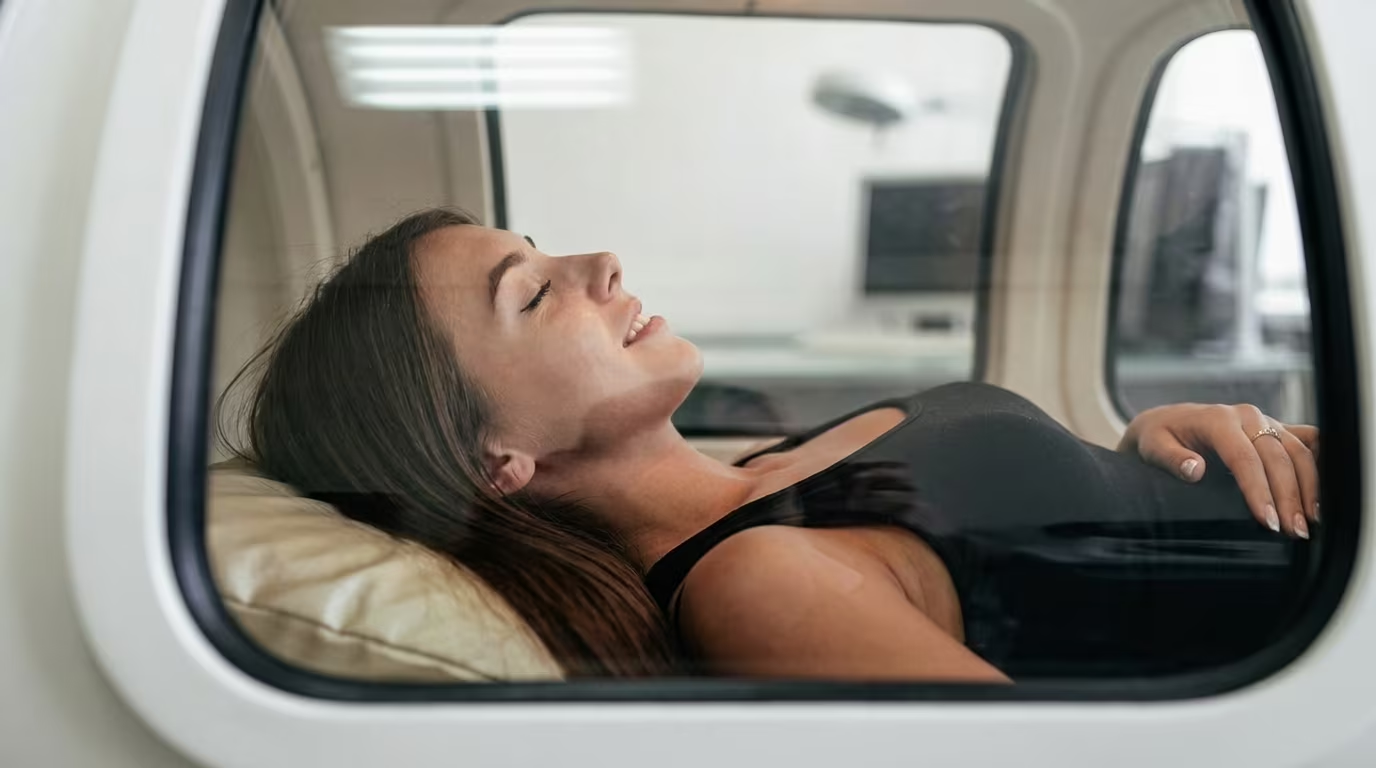
A responsible clinic will ask all of the following, and will not book you until it has answers:
Per the FDA's 2025 provider guidance, this list is a fire-safety requirement, not a preference:
The chamber pressurizes gradually over roughly 10 to 15 minutes. This is the phase where your ears need to equalize, and it is the phase where nearly all complications occur. Swallow, yawn, move your jaw or perform a gentle Valsalva continuously — do not wait until you feel pain. Tell staff immediately if you cannot clear; slowing the compression rate is a proven way to reduce ear injury.
You then breathe oxygen at treatment pressure. Our standard Brickell session runs 60 minutes at pressure, and most patients rest, listen to music or sleep. You remain in two-way communication with staff throughout.
One point of honesty worth making, because most clinic pages skip it: the trial protocols cited above — Efrati's fibromyalgia and post-COVID studies, Thom's stem cell work — used 90-minute sessions across 40 treatments. A shorter session is a lower dose, and a single session is not a course. If your goal is to replicate a published protocol, that should be an explicit part of the treatment plan you agree on.
Decompression takes another 10 to 15 minutes. Most patients feel clear-headed afterwards and there is no downtime.
Absolute contraindications: untreated pneumothorax — changing ambient pressure can precipitate a life-threatening tension pneumothorax — and intraocular gas.
Relative contraindications include recent bleomycin, doxorubicin or cisplatin chemotherapy; COPD with carbon dioxide retention; pulmonary blebs or prior spontaneous pneumothorax; disulfiram; non-pressure-rated implanted devices; eustachian tube dysfunction, recent upper respiratory infection or prior ear surgery; fever above 39°C; seizure history; insulin-dependent diabetes; heart failure with reduced ejection fraction; pregnancy; and significant claustrophobia.
Notably, active cancer is no longer considered a contraindication — the available evidence suggests HBOT has little to no effect on cancer progression, revising older guidance.
Side effect rates, from the published literature:
In context: this is a well-tolerated therapy with one common, mostly mild complication (ear barotrauma) that is largely preventable with slow compression and good equalization technique.
For recognized medical indications, standard courses run 20 to 60 treatments; the major research protocols used 40. That sits comfortably below the exposure threshold where cataract progression becomes a concern.
Medicare's coverage determination lists 15 covered conditions and explicitly does not cover 22 others, including chronic peripheral vascular insufficiency, multiple sclerosis and Alzheimer's disease. Wellness and recovery indications are self-pay. A single session at our Brickell clinic is $148, with a 3-session package at $384 and a 6-session package at $588 (both totals, not per-session prices) — ask for the total course cost, not the single-session price, when you compare providers.
It depends entirely on the goal. Recognized medical indications typically require 20 to 60 sessions. The published post-COVID and fibromyalgia protocols used 40. One or two sessions will not reproduce those results, and any provider selling HBOT as a one-off recovery treatment should be asked what evidence supports that.
In clinical hard-shell chambers with trained staff and proper screening, overall adverse effect rates are around 0.4%. The most common issue is ear discomfort during compression. The most serious risks — fire and oxygen toxicity seizures — are why the clothing rules and pressure protocols exist.
Often, yes. Modern chambers have viewing ports and two-way communication, and many patients who expect to struggle do not. Tell the clinic in advance so staff can talk you through the first compression, and understand that severe claustrophobia may make it unsafe.
There is one positive randomized trial using 40 sessions at 2.0 ATA and one null trial using 10 sessions. The evidence is genuinely mixed, the effect sizes in the positive trial were small to moderate, and the FDA has not cleared HBOT for COVID-related conditions. Anyone promising you a result here is going beyond the data.
Pregnancy is traditionally treated as a relative contraindication. Elective wellness use during pregnancy is not appropriate; certain emergencies such as carbon monoxide poisoning are an exception managed in a hospital setting.
Improved tissue oxygenation and collagen synthesis are plausible mechanisms, but these are wellness applications without the trial evidence behind the recognized indications. If those are your goals, hair restoration and red light therapy are more directly studied for them.
Nexsis BioHealth operates a clinical-grade hard-shell hyperbaric chamber at 40 SW 13th Street, Suite 601–602 in Brickell, Miami, staffed by trained medical personnel under physician supervision. We see patients from Coral Gables, Coconut Grove, Downtown Miami, Wynwood, Key Biscayne and across South Florida, with easy access from US-1 and I-95 and parking available.
Before your first session we complete a full medical screening and set an explicit plan — how many sessions, at what pressure, for how long, and how we will judge whether it is working. If HBOT is not the right tool for your goal, we will say so and point you somewhere more useful, whether that is IV therapy, red light therapy or regenerative treatment.
Book a consultation or call (844) 741-1580 to check current chamber availability.
This article is for general educational purposes and does not constitute medical advice, diagnosis or treatment, and it does not create a physician-patient relationship. Hyperbaric oxygen therapy is FDA-cleared for a specific list of conditions; uses outside that list are off-label wellness applications and are not proven to be effective. Information reflects the published evidence as of August 2026. Do not begin or discontinue any therapy without consulting a licensed physician who has reviewed your medical history.